
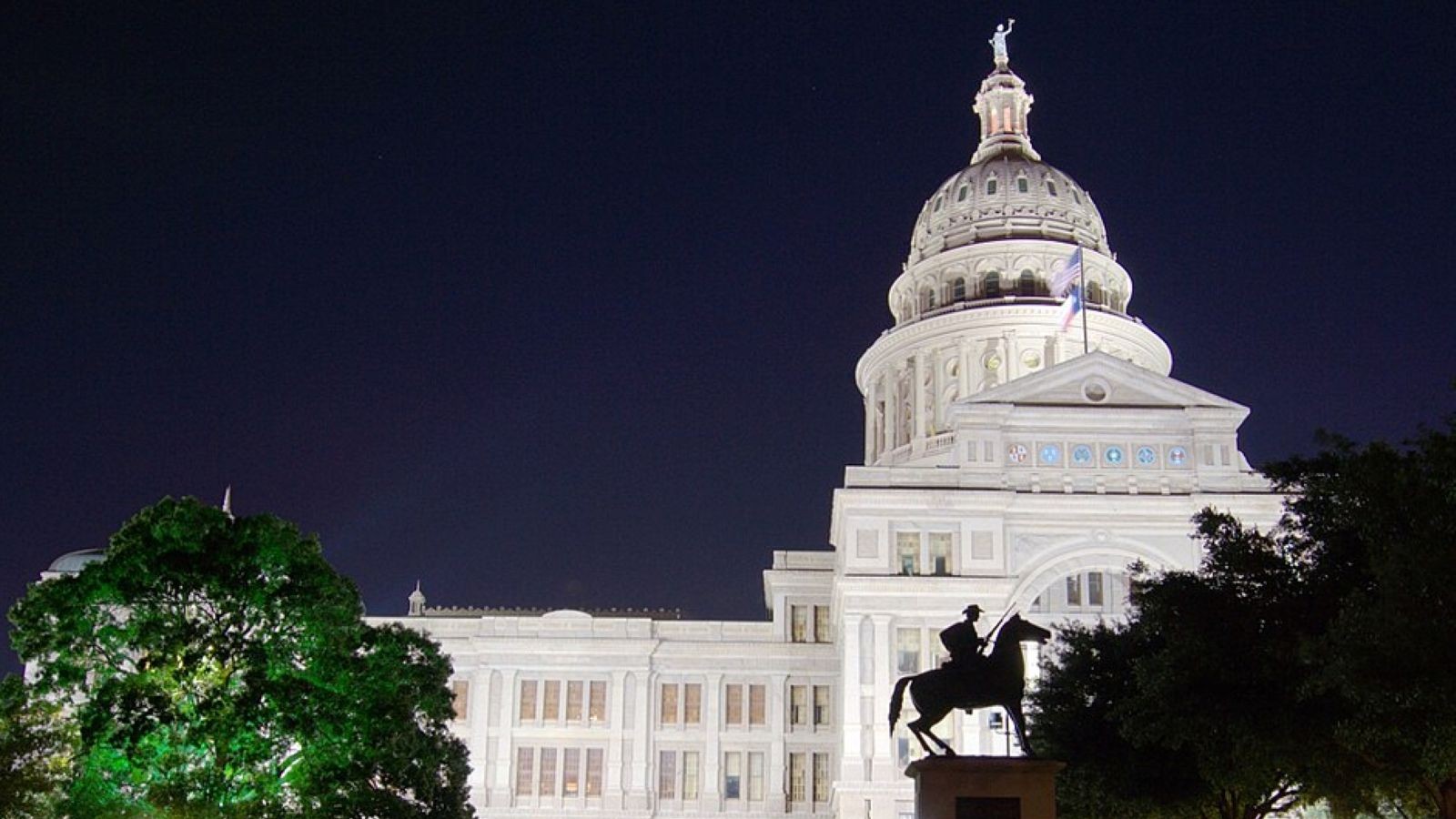
- Texas voters will choose a new attorney general in November, the first open race for the office in over a decade, and the winner will steer how the state’s gambling laws are enforced.
- Republican Mayes Middleton has campaigned on suing illegal gambling operators and anyone trying to widen gambling in the state.
- Democrat Nathan Johnson, during his time in the state Senate, pushed a measure to put legalized, regulated casino resorts to a public vote.
- The job cannot create or repeal gambling law on its own; its real power lies in issuing legal opinions and bringing civil cases.
- A 2016 opinion branding daily fantasy sports illegal, never actually enforced, is a preview of the leeway the next attorney general will hold.
AUSTIN – Almost every conversation about gambling in Texas circles back to the Legislature and the next opening for lawmakers to approve casinos or sports betting when the session resumes in 2027. Yet the official with the most day-to-day sway over gambling before then will be chosen this fall, and the Texas attorney general race hands voters a real choice between two directions.
For the first time in more than ten years, the office has no incumbent seeking it. Ken Paxton passed on another term to campaign for the U.S. Senate, and although he is still the sitting attorney general, he captured the Republican Senate nomination in a May runoff over veteran Sen. John Cornyn. His replacement will be decided in November between two sitting state senators whose gambling views barely overlap: Republican Mayes Middleton of Galveston and Democrat Nathan Johnson of Dallas.
For Middleton, enforcement is a selling point. He has promised to wield lawsuits, civil and criminal penalties, and the threat of removal from office against businesses that violate the state’s gambling statutes, officials who refuse to enforce them, and anyone working to widen gambling by unlawful means. That fits comfortably with where the Texas Republican Party sits, and with Lt. Gov. Dan Patrick, who has kept gambling-expansion measures bottled up rather than allowing a Senate vote.
Johnson stands at the other end. During the 2025 session he put forward a resolution asking Texans to strike the constitutional prohibition and permit a small, tightly regulated group of destination casino resorts, paired with licensing, fees and a levy on gaming revenue. He cast it less as a personal campaign for casinos than as a chance to let the electorate resolve something the Legislature keeps sidestepping, and he has separately argued for cracking down harder on what he calls a sprawling, predatory illegal gambling trade.
The distance between the two candidates counts for less than it looks, and in another sense for more. No attorney general can legalize gambling or undo the constitutional ban, which is the work of lawmakers and, in the end, voters, and the office cannot invent new crimes. Its leverage is quieter. The attorney general interprets Texas gambling laws through formal opinions, chooses which civil matters the Consumer Protection Division takes on, and sets how closely to coordinate with the county prosecutors who actually file criminal charges. For the gray-market operators living in the state’s legal blind spot, that discretion is nearly the whole contest.
Daily fantasy sports shows how little a single opinion resolves. Paxton weighed in on the games in 2016, issuing a formal opinion that paying to enter contests on sites such as DraftKings and FanDuel most likely amounted to illegal gambling under state law. A decade later, the practical effect is close to nothing. Opinions like that one steer enforcement without carrying the weight of a statute or a court judgment, and because neither the courts nor the Legislature ever settled the matter, the apps kept enrolling Texans anyway. FanDuel briefly dropped its paid daily fantasy sports contests before returning, while DraftKings went the other way and sued the attorney general’s office. The result was a market that is neither plainly legal nor plainly banned. The same fog sits over sweepstakes casinos, which keep operating in Texas even as a run of other states, among them Oklahoma, Louisiana and Tennessee, move to shut them down, and over prediction markets such as Kalshi, whose event contracts resemble sports bets and which Texas, unlike several states, has chosen not to drag into court.
That is what lands on the next attorney general’s desk: not the power to rewrite the rulebook, but wide room to decide which of these operators gets a warning, a lawsuit, or a pass. Middleton in the job would likely translate into tougher opinions and enforcement against the gray market. Johnson in the job would likely mean a gentler approach and more willingness to let voters weigh in, though Texas has not sent a Democrat to statewide office since 1994, and Middleton is the favorite.
None of this shifts what Texans can legally bet on right now. Among the licensed and unlicensed gambling sites in Texas, the only lawful options remain pari-mutuel horse racing, charitable bingo and the lottery, with no commercial casino and no state-sanctioned sportsbook. What November settles is not whether that short menu grows, but how forcefully the state’s chief lawyer presses on everything working the margins.