
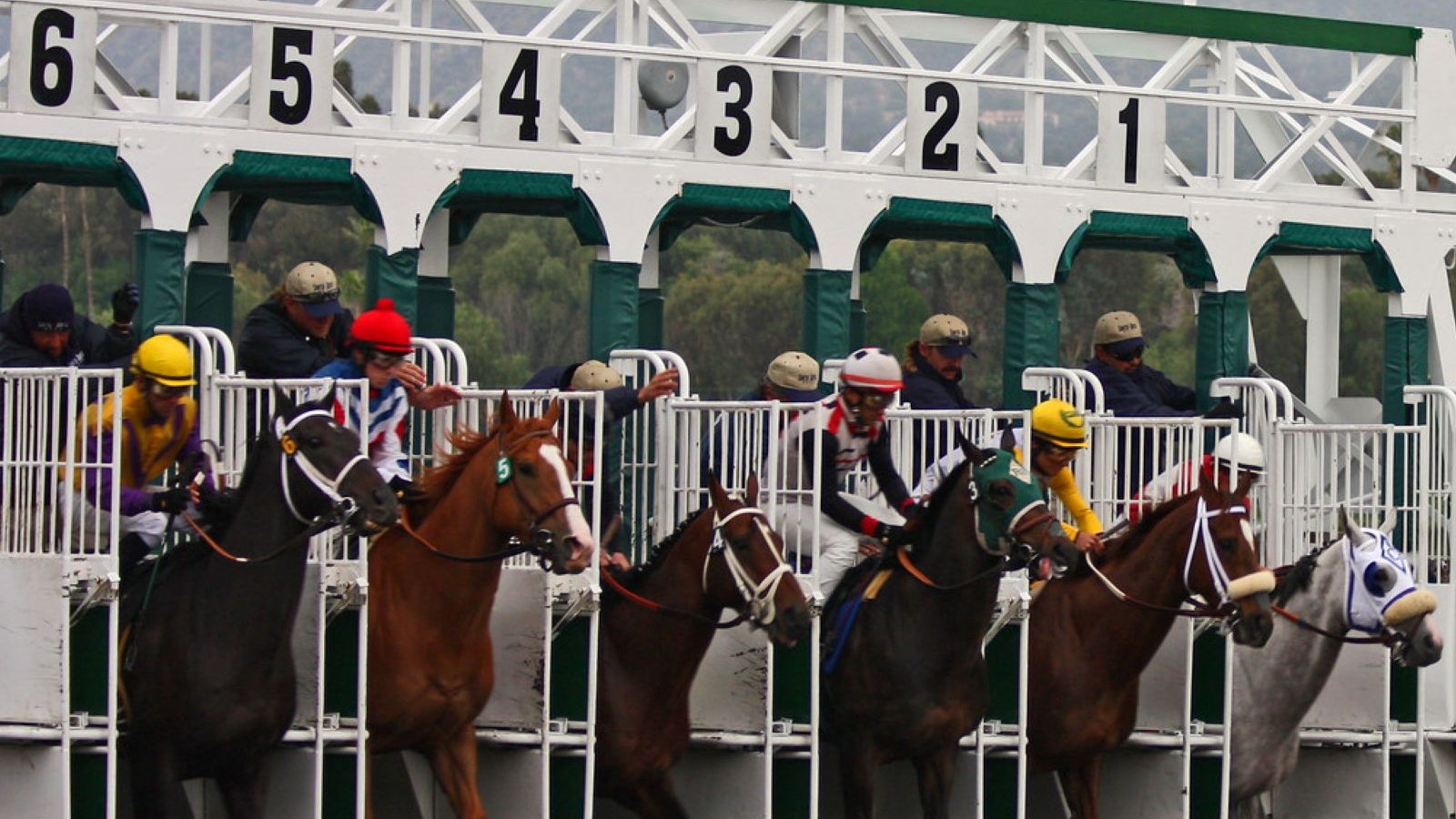
- Online horse-racing wagers were briefly available to Texans again in February, the first time since 2013, after TwinSpires reopened to residents on the back of a federal court win.
- Within days the Texas Racing Commission answered with a cease-and-desist, and Attorney General Ken Paxton took Churchill Downs, TwinSpires’ parent, to court.
- The platform shut Texas wagering off on its own on Feb. 27, and by April 29 the state had withdrawn its suit without prejudice, so no judge ever decided the central question.
- At the heart of it sits the Interstate Horseracing Act, the 1978 federal statute TwinSpires argues trumps Texas’s insistence that pari-mutuel bets be placed only at licensed tracks.
- Federally regulated prediction markets still let Texans trade on sports results, even though placing a pari-mutuel horse bet online from home remains off-limits.
AUSTIN – For roughly three weeks last winter, something Texas had shut off for over a decade quietly worked again: a resident could bet a horse race from a phone. Texas online horse betting came back in early February, when the advance-deposit operator TwinSpires reopened to bettors around the state. The window closed by month’s end, and by late April the court fight that had cracked it open was over, with no ruling on whether Texas is even allowed to keep the door shut.
A Court Win Two Circuits Away
What reopened it was a decision handed down nowhere near Texas. In litigation the Michigan Gaming Control Board had started, a December ruling from the 6th U.S. Circuit Court of Appeals found that the Interstate Horseracing Act, the federal statute covering wagering that crosses state lines, does not oblige an operator to secure sign-off from the regulator in the bettor’s own state. A lower-court order made that injunction permanent in January. The logic ran this way: an advance-deposit bet is treated as being accepted at a pari-mutuel hub, which in practice means North Dakota or Oregon, so the approval that counts belongs to those states rather than to wherever the customer happens to sit. TwinSpires read it as a green light and flipped Texas back on Feb. 4, its first Texas activity since it left in September 2013.
Texas Pushes Back Fast
The pushback came within days. David Holmes, the Racing Commission’s interim executive director, mailed Churchill Downs subsidiary United Tote a cease-and-desist on Feb. 7 and copied Paxton, ordering the company to stop handling any horse or greyhound bet placed in Texas beyond the grounds of a licensed track. He laid out a row of penalties: as much as $10,000 for each violation, suspension or revocation of licenses, and even criminal exposure, including for helping minors gamble. Two days later, United Tote’s president answered that the company would not back down.
All of it circled back to the rule that ranks Texas among the toughest states for horse race betting in Texas: a pari-mutuel wager has to be placed in person, inside a licensed track or a simulcast facility. Churchill Downs had gone after that limit once already, back in 2012, casting it as an unconstitutional drag on interstate commerce. The judge in that case sided with the state, and TwinSpires pulled out the following year.
From Cease-And-Desist To Lawsuit
The state raised the stakes on Feb. 24. Paxton, joined by the Racing Commission, sued Churchill Downs, TwinSpires, and United Tote in Collin County District Court, seeking a temporary restraining order and a permanent injunction and branding the online bets a threat of “immediate and irreparable public harm” to Texans. Within three days, and without a judge lifting a finger, TwinSpires folded. On Feb. 27 it told Texas customers their wagering was suspended, leaving them able to pull money out but not to place new bets.
That did not necessarily signal surrender. Churchill Downs shifted the case on March 30 to the U.S. District Court for the Eastern District of Texas, arguing it belonged in federal hands because the Interstate Horseracing Act “exclusively regulates interstate wagering” on the sport. What mattered more than the courtroom was the geography. The Michigan victory had come out of the 6th Circuit, while Texas answers to the 5th Circuit, which owes it no deference, so Churchill Downs would have had to win the whole argument over from scratch.
A Quiet Exit, No Ruling
The chance never came, because Texas backed out first. The state and its commission filed a voluntary dismissal of the lawsuit on April 29, and they made it without prejudice, which lets the state refile the instant TwinSpires or another operator tries again. With the site already dark, that was the end of it. No one on the bench decided whether federal law entitles Texans to bet a horse online, and TwinSpires stays switched off across the state.
Texas Racing Didn’t Want It Either
What tends to get lost in the state-against-operator storyline is that Texas racing itself had no appetite for TwinSpires returning on these terms. Two familiar figures pressed the commission to intervene at its February meeting: Bryan Pettigrew, who manages Sam Houston Race Park, and Tracy Sheffield, who runs the Texas Thoroughbred Association. The arrangement “does nothing for racing,” Sheffield said, because TwinSpires steers bets past Texas tracks rather than through them, leaving the tracks and the state’s horsemen with none of the take. Their objection was aimed not at online betting as a concept but at a version of it that hands Texas racing nothing.
The whole affair offers a narrow glimpse of a wider quirk in where Texas chooses to draw its gambling boundaries. It stays among the nation’s most restrictive states, with lawful betting across the licensed and unlicensed gambling sites in Texas limited to charitable bingo, the lottery and pari-mutuel horse racing, and neither a commercial casino nor a state-sanctioned sportsbook anywhere in the picture.
A Sports Bet, But Not A Horse Bet
And yet the newest wagering formats meet far less resistance than the oldest one. A Texan right now can log into a federally regulated prediction market, the sort of Texas prediction markets now drawing scrutiny from state officials, and buy contracts on how a game or an election turns out, a product that behaves an awful lot like sports betting. Lt. Gov. Dan Patrick has signaled he wants that loophole closed before lawmakers meet in 2027. The upshot, for the moment, is an odd split screen: a Texan can back a sporting result with a single tap, yet still cannot lawfully place a pari-mutuel horse bet online, the one wagering format with a federal law built expressly to clear its way across state lines.