
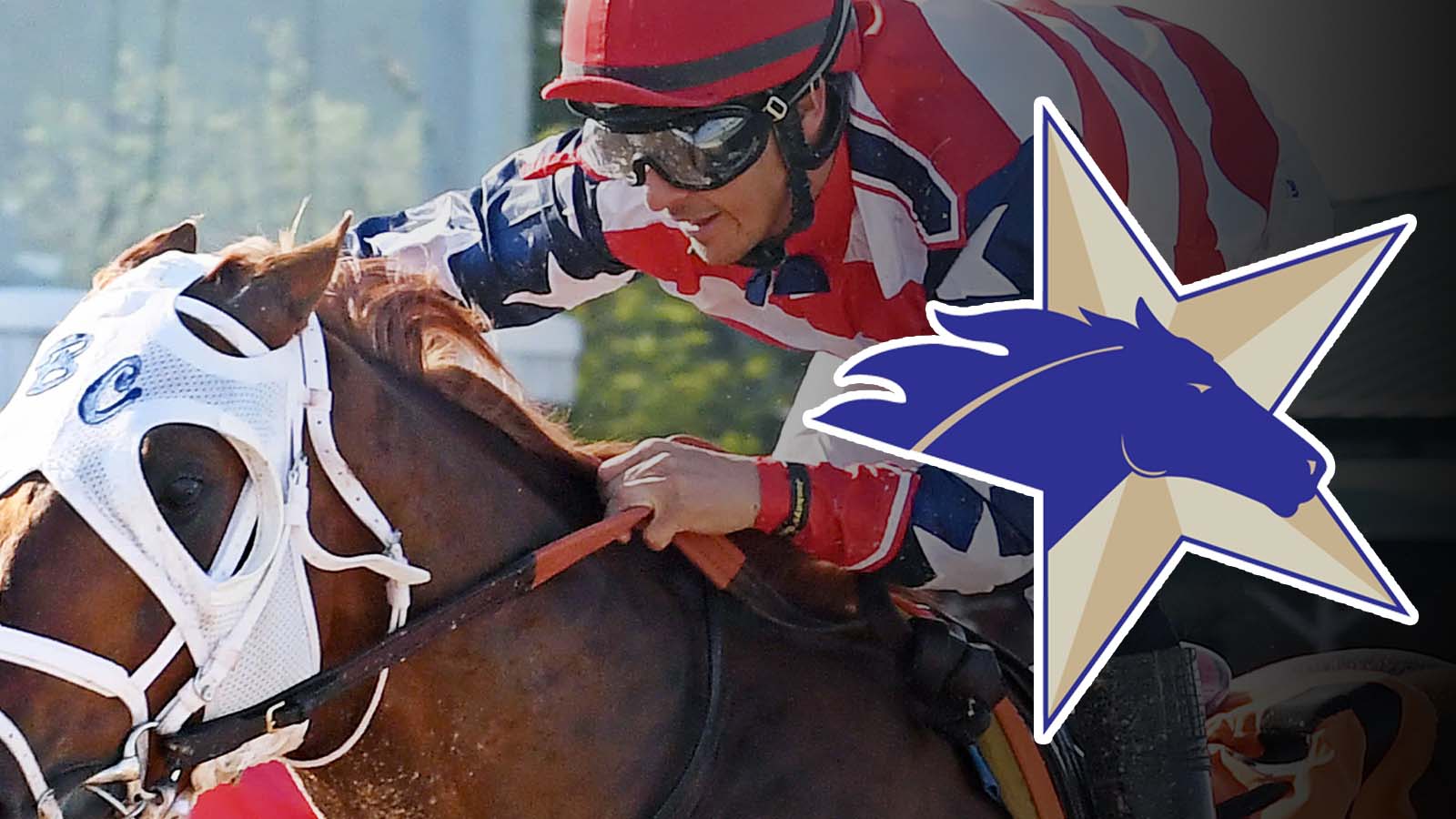
- The Texas Thoroughbred Association wants the simulcast signal exported again before Sam Houston Race Park opens in December.
- Sam Houston Race Park says its interstate handle fell from about $100 million in 2022 to about $10 million once exports stopped.
- The Horseracing Integrity and Safety Authority’s outside counsel says Texas tracks need no formal agreement to resume exporting under its rules.
- Mares bred to Texas stallions fell from 425 in 2023 to 230 in 2025, The Jockey Club’s Texas Fact Book shows.
AUSTIN, Texas – The Texas Thoroughbred Association wants Texas tracks to export their simulcast signal again before Sam Houston Race Park opens in December. The Texas Racing Commission added the status of horse racing to its Oct. 14 agenda to hear from the industry.
Commission Sets Racing Panels For Oct. 14 Session
The commission meets in two sessions Oct. 14 in Austin, at 9:30 a.m. and 11 a.m., according to its agenda. The second session is devoted to the status of horse racing in Texas, with one panel of breed associations and the Texas Horsemen’s Partnership and another of Texas racetracks. Sam Houston Race Park general manager Bryan Pettigrew and Texas Thoroughbred Association president Phil Leckinger are among the scheduled speakers, BloodHorse reported.
David Holmes, appointed the commission’s executive director in February, told BloodHorse the item followed a suggestion from Judge Robert Pate, the commission’s chairman, to hear directly from stakeholders. Holmes said participants can raise anything, including whether commission rules hold them back, and that the session would help everyone understand the industry’s needs going into the Legislature’s 2027 session. Lawmakers convene Jan. 12, 2027, and set the rules for gambling in Texas.
Interstate Handle Fell About 90 Percent After 2022 Halt
Out-of-state bettors wagered about $100 million on Sam Houston Race Park’s races in 2022, Pettigrew told BloodHorse, and the annual figure dropped to roughly $10 million once the commission ordered tracks that year to keep their signals inside Texas. Pettigrew put the track’s lost purse money and operating income at $3 million to $4 million a year. Leckinger told BloodHorse the association wants the signal running before Sam Houston’s December opener.
The halt kept Texas racing under state rules rather than those of the Horseracing Integrity and Safety Authority, or HISA, the national regulator Congress created, BloodHorse reported. HISA’s main enforcement lever, according to BloodHorse, is cutting off interstate wagering on tracks that stay outside its system.
The plaintiffs who challenged HISA’s constitutionality included the Texas Racing Commission, the Texas Horsemen’s Partnership and Global Gaming, which owns Lone Star Park. Louisiana and West Virginia won preliminary injunctions that let their tracks keep state oversight while exporting signals; Texas did not, BloodHorse reported. The constitutional question is still open roughly five years after the suits began.
Purses Down 14 Percent Since 2022, Mares Bred Down 46 Percent Since 2023
The Jockey Club’s 2026 Texas Fact Book, with figures as of Sept. 1, lists $21.5 million in Thoroughbred purses over 88 race days in Texas in 2025, against $24.9 million over 102 race days in 2022. Races fell to 700 from 858 over that span while average field size rose to 8.2 from 7.7, meaning fewer races to wager on, each with about half a runner more.
Mares bred to Texas stallions fell to 230 in 2025 from 425 in 2023, the same book shows, and the count of active Texas stallions fell from 68 to 34.
Leckinger estimated the 2026 number of mares at 200 to 210, BloodHorse reported. He said a share of wagering breakage that returns to breed organizations has dried up, leaving less money for stallion and mare incentives. Texas routes sales tax from horse-related purchases into its Horse Industry Escrow Account. That fund has paid millions toward purses, BloodHorse reported, and tracks have still trimmed race dates and purse money.
HISA Counsel Says The Signal Only Needs To Be Exported
John Roach, HISA’s outside general counsel, told BloodHorse the authority wants Texas tracks exporting and under its rules, and he sees no need for a formal pact. “The signal simply needs to be exported,” Roach said. As of Oct. 13, he said, nobody had told him the signal would be sent out for the coming meet.
Roach cited Ohio and Oklahoma, where tracks race under HISA and export their signals, BloodHorse reported. Pettigrew told BloodHorse he sees room for a deal in which Sam Houston exports its signal and pays HISA dues while both sides cooperate “until the Supreme Court rules.”
Sam Houston and Lone Star Park, which run the state’s Thoroughbred meets, would owe HISA assessments calculated on starts, and BloodHorse put the combined bill in the hundreds of thousands. Roach said HISA had not budgeted the Texas money and could not give a precise number. Aligning with HISA protocols could also mean a track adds a veterinarian or more safety staff, BloodHorse reported.
Texas Still Bars Online And Off-Track Horse Wagering
Texas allows no advance-deposit or off-track horse wagering, BloodHorse reported, so legal horse betting in Texas is confined to tracks running live meets and the other locations the state licenses. A restored signal would let out-of-state outlets take bets on Texas races again, without changing where Texans can place theirs. The state’s limits were tested in February, when Texans could bet horses online again for about three weeks before TwinSpires suspended Texas wagering.
Agenda Also Covers Twin Trifecta Rules, Breed Funds And Retama Dates
At the 9:30 a.m. session, the commission can vote to publish proposed amendments to its twin trifecta and tri-superfecta rules in the Texas Register. The proposals, to 16 Texas Administrative Code Sections 321.311 and 321.315, tie both exotic wagers to the Association of Racing Commissioners International’s Model Rules of Racing as amended in August 2026. A fiscal note from Holmes estimates no added cost or revenue change for state or local government, and comments would run 30 days after publication.
The same session lists allocations from the Horse Industry Escrow Account to the Texas Quarter Horse Association and the Texas Thoroughbred Association, and the allocation of live race dates for Retama Park. Retama Park asked for 24 dates from June 24 to Aug. 21, 2027, with 96 percent of races for Quarter Horses and 4 percent for Paint Horses, according to the commission’s meeting materials. The request projects purses of $189,000 a day for Quarter Horse racing and $36,000 a day for Paint Horse racing from all sources.
The commission’s next meeting is Dec. 9, according to the agenda.