
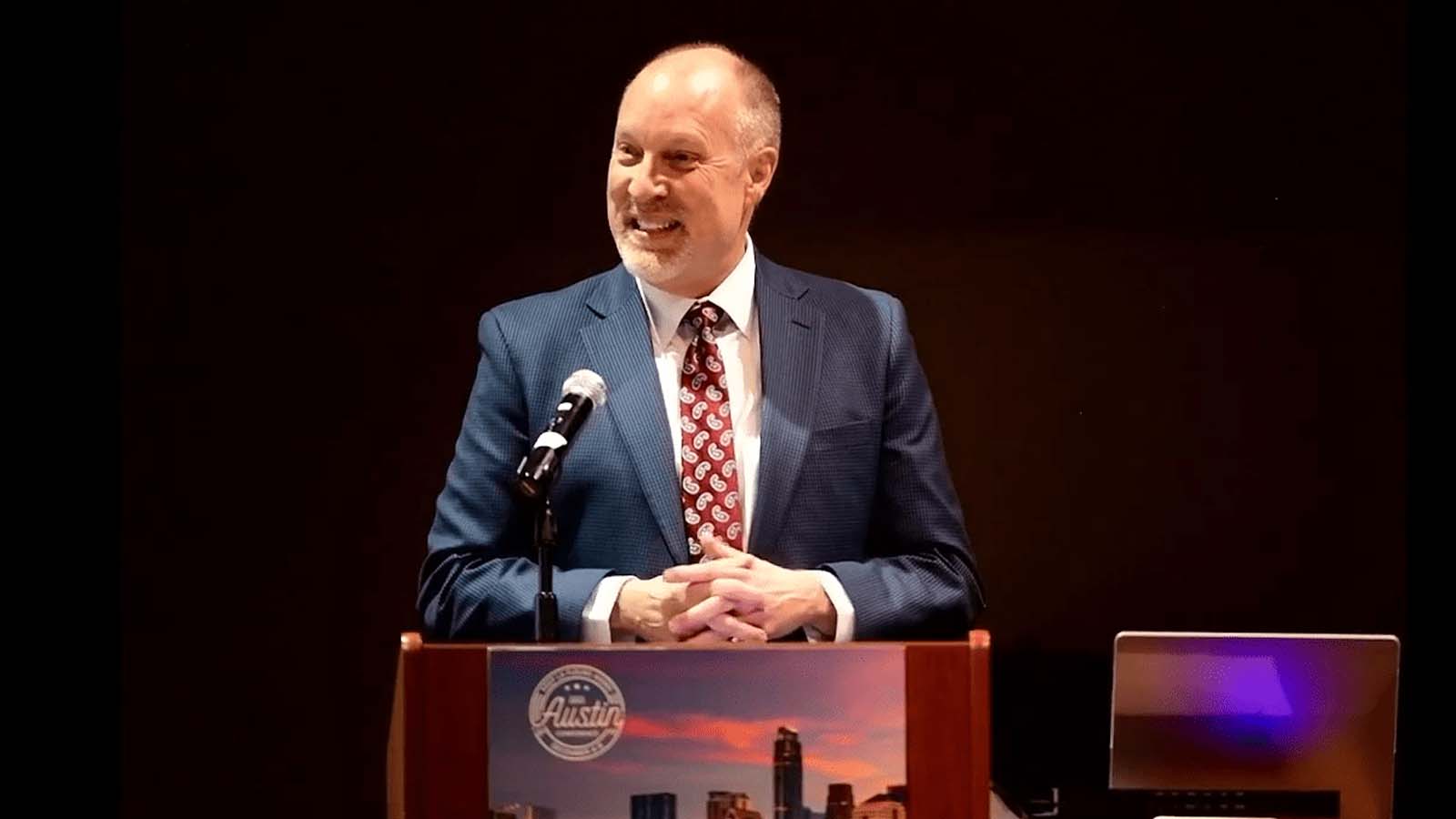
- An offshore syndicate spent about $25 million to buy roughly 25.8 million tickets, more than 99 percent of every possible combination, turning the April 2023 drawing into a guaranteed $57.8 million win.
- Gary Grief, the lottery’s longest-serving director, was reindicted on a felony abuse-of-official-capacity charge on May 13 and is due in an Austin court June 26, after an identical indictment in April was dropped a day later.
- The fallout has already erased the agency itself, with lawmakers passing SB 3070 to abolish the Texas Lottery Commission and fold its duties into a state licensing department.
- A second engineered jackpot, an $83.5 million win through the Jackpocket courier app, pushed Gov. Abbott to send in the Texas Rangers and the commission to ban couriers statewide.
AUSTIN – Gary Grief, who ran the now-dissolved Texas Lottery Commission for 14 years before retiring in January 2024, was indicted again on May 13, 2026 by a grand jury in Travis County. The new indictment names him on a single felony count of abuse of official capacity, the Texas statute covering misuse of a public position. The charge attaches to his alleged role in the April 22, 2023 Lotto Texas drawing, the one an offshore syndicate gamed by buying nearly every possible ticket combination and walking out with $95 million. Grief is due in the 167th District Court in Travis County the morning of June 26 at 9 a.m.
The Texas Lottery scandal has cut a wide path through state government. Federal prosecutors in Manhattan have produced one securities-fraud guilty plea after another against executives of the courier company that helped buy the tickets. Two of the state’s senior lottery officials have stepped down. The Legislature has banned third-party lottery couriers, abolished the lottery commission, and folded the lottery’s regulatory functions into a different agency. Grief stands alone as the only senior Texas state official charged criminally for any of it. The agency he ran, dissolved by the Legislature in May 2025 and replaced by a program inside the Texas Department of Licensing and Regulation effective Oct. 1, 2025, drew its own indictment from the same grand jury on May 13.
The drawing at the center of the case was won by Rook TX, a Delaware-registered entity tied to Australian professional gambler Zeljko Ranogajec and London-based betting operator Bernard Marantelli. Rook TX put down approximately $25 million across four retailer locations to acquire roughly 25.8 million Lotto Texas tickets, covering more than 99 percent of all possible six-digit combinations. The math made winning a certainty. Rook TX collected $57.8 million as a lump-sum payout. Lottery.com, a Texas-based publicly traded courier company, ran the ticket acquisition. Commission staff fast-tracked approval for the extra ticket-printing terminals the participating retailers needed to handle the volume. Former Lottery.com chief operating officer Greg Potts told the Texas Senate State Affairs Committee on Feb. 24, 2025 that Grief had personally signed off on the operation in advance. Sunset Advisory Commission review materials and internal agency records support that account.
A second jackpot finished the political case against the commission. Kristen Moriarty won $83.5 million on Feb. 17, 2025 through Jackpocket, a courier app that owned the Austin convenience store where the winning ticket was bought. Lt. Gov. Dan Patrick personally toured the store, Winners Corner, and confirmed it housed 47 lottery terminals. One week later, on Feb. 24, 2025, Gov. Greg Abbott ordered the Texas Rangers to investigate both jackpots. The lottery commission banned courier services within days. Jackpocket suspended its Texas operations. Lottery.com filed suit against the commission in April 2025. Commissioner Clark Smith stepped down Feb. 28, 2025. Executive Director Ryan Mindell, who had taken over from Grief in 2024, left the agency April 21, 2025. Moriarty was paid Aug. 1, 2025, more than five months after her win was confirmed.
Patrick characterized the $95 million drawing as the largest theft against Texas taxpayers in state history during his February 2025 testimony before the Senate.
Federal prosecutors in the Southern District of New York have run a parallel securities-fraud track. On Feb. 20, 2025 they unsealed an indictment against Vadim Komissarov, a Russian national and former chief executive of Trident Acquisitions Corp., the special-purpose acquisition company that took Lottery.com public. Komissarov was charged with conspiracy to commit securities fraud, perjury, and obstruction of justice. Matthew Clemenson, the former Lottery.com chief revenue officer, and Ryan Dickinson, the company’s former CFO, each entered guilty pleas to securities-fraud counts in May 2025. Komissarov entered his own guilty plea in early 2026. He faces up to 20 years.
The Texas Legislature took up the scandal during its 89th regular session and ended it by killing the commission. Senate Bill 3070 transferred the state lottery and charitable bingo programs into TDLR. Sen. Bob Hall, R-Edgewood, closed a six-hour State Affairs Committee hearing on Feb. 24, 2025 with the line that “Texas is not open for gambling.” The transfer took effect Oct. 1, 2025. The lottery’s existing administrative rules under Title 16, Part 9 of the Texas Administrative Code were relocated to Title 16, Part 4 of the same code under the new agency. Few modern Texas regulatory bodies have been wiped out by the Legislature during an active criminal investigation; this is the cleanest example in recent state history.
Grief left the commission abruptly in January 2024, just before the Houston Chronicle’s investigative coverage of the foreign-syndicate scheme reached its full public airing. The same Travis County grand jury indicted him for the first time in April 2026 on the same charge. The case was dismissed within a day. The District Attorney’s office has not publicly explained the dismissal or what changed between April and the May 13 reindictment. Sam Bassett, Grief’s defense attorney, told the Houston Chronicle that the new charge is “the product of politics, not facts demonstrating a crime” and that the Texas Rangers’ investigation was driven by lawmakers searching for a scapegoat.
Whether the second indictment lasts longer than the first will be tested in the 167th District Court the morning of June 26. If the charge survives, Texas will pursue a criminal trial against the former head of an agency the Legislature has already wiped off the books over the same facts. The outcome will reshape oversight for gambling sites in Texas more broadly.